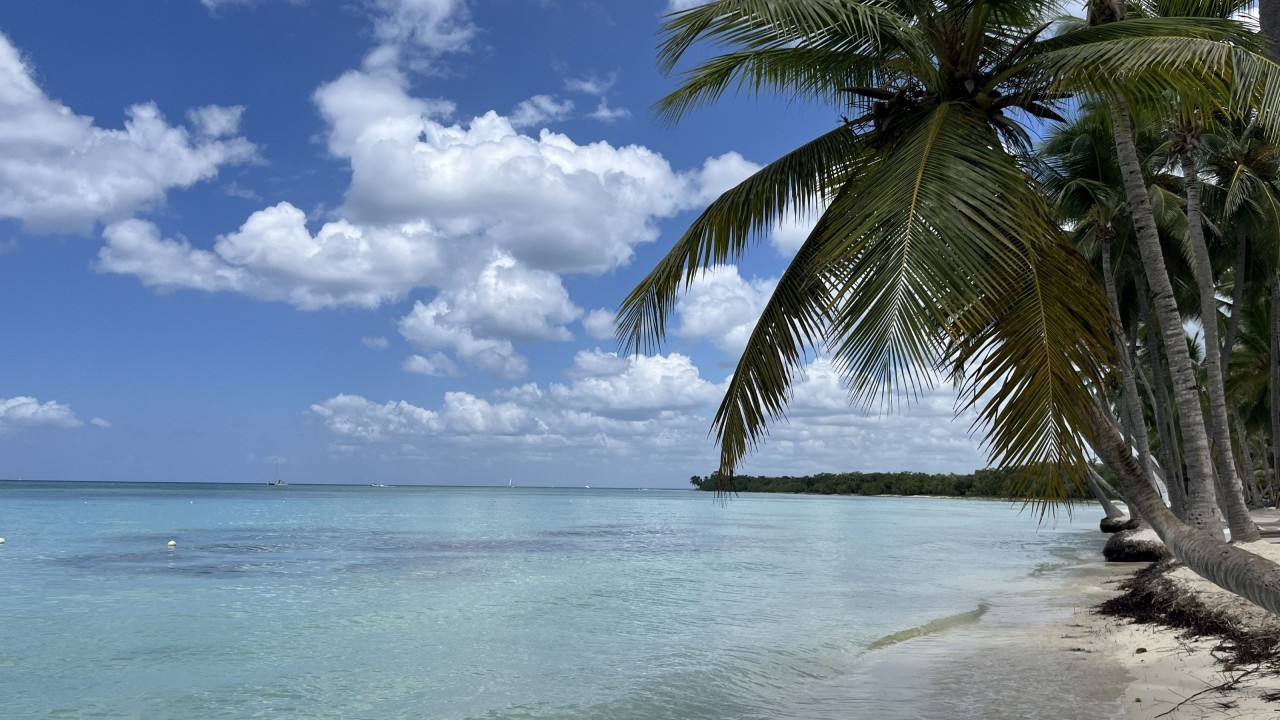
Over the years, I’ve witnessed the rapid transformation of some of the world’s most beautiful beaches – from the Mediterranean and Red Sea to Zanzibar, the Caribbean, and Mexico’s Yucatan Peninsula. Entire coastlines are being reshaped by uncontrolled development, pollution, and warming oceans that trigger unprecedented algal blooms and extreme weather events.
This past summer, my family and I escaped the heat for a few weeks on Egypt’s Mediterranean coast, followed by a week in the Dominican Republic. In both places, we sought quiet moments in nature, away from the crowds, before the new school year began.
We had a wonderful time, but I couldn’t shake one troubling realization: finding natural, clean beaches – the kind that should be everywhere – has become nearly impossible. What was once the norm is now the exception.
But what’s behind this decline? Rapid coastal development, climate change, and pollution are steadily degrading these ecosystems, diminishing the experience for anyone who values nature.
In this article, I’ll outline how a path forward demands action on multiple fronts: protecting at least 30% of coastal ecosystems by 2030 through the Global Biodiversity Framework’s 30×30 initiative, slashing ocean pollution and plastics, controlling invasive seaweeds like sargassum, and preparing for the intensifying hurricanes that climate change is unleashing.
I’ll also explore two critical concepts every policymaker, investor and traveler should understand: the economic value of nature, which sustains long-term tourism and real-estate returns, and environmental generational amnesia – the risk that future generations will never know what pristine beaches once looked like.

The Med: Balancing Development with Nature Conservation
We spent the first part of our summer on Egypt’s Mediterranean coast, staying on Sidi Abdel Rahman Bay – one of the most stunning stretches, about 130 km west of Alexandria near Alamein. We also stopped by Caesar’s Bay and Almaza Bay further west. Standing on those shores with my kids, I could see both the extraordinary beauty of this coastline and the pressures threatening to erase it.
The transformation has been staggering. Thirty years ago, much of Egypt’s 1,000 km Mediterranean coastline was relatively untouched. Today, fueled by Gulf investments, it’s an almost unbroken line of resorts and construction projects. The impact is impossible to ignore.
Development has left only a handful of protected areas along Egypt’s Mediterranean shore – and even these are under siege. They include: Sallum Protected Area near the Libyan border; El Omayed, a UNESCO Biosphere Reserve about 80 km west of Alexandria; Lake Burullus, a Ramsar-designated wetland in the Nile Delta east of Rosetta; and Zaranik, at the eastern tip of Lake Bardawil, famous for producing Egypt’s finest Batarekh – salted mullet roe, a delicacy prized across the region.
I’m not against development – Egypt’s economy and jobs depend on tourism and investment. But there’s a balance to strike. When I’m on these beaches with my kids, I can’t help asking: will there be any natural coastline left for them when they’re my age?
Overdevelopment isn’t just an environmental issue – it’s self-defeating. Marinas disrupt coastal dynamics, resorts become overcrowded, erosion accelerates, waste piles up. The real tragedy? We’re eroding the very asset that made these places valuable: the pristine nature that drew people here in the first place. We’re killing the golden goose.
Other Mediterranean countries have been down this road. Spain overbuilt the Costa del Sol and Costa Brava – and is now fixing it. They’re restoring wetlands and dunes, restricting shoreline construction, and expanding marine protected areas. The Balearics are protecting Posidonia seagrass, and the Ebro Delta is being restored.
The pattern repeats across the region. Greece is making real progress toward protecting 30% of its waters by 2030, expanding marine reserves in the Ionian and Aegean, restoring seagrass, and protecting endangered monk seals. France has done the same – from the mainland to Corsica – through parks like Port-Cros and the Calanques that blend conservation with tourism. Turkey’s strengthened protection in Gökova Bay and Kaş-Kekova. Even transboundary efforts like the Adriatic-Ionian initiative show what’s possible when countries work together.
This matters because right now, only 1–3% of the Mediterranean is effectively protected. That’s nowhere near enough.
But coastal overdevelopment is only part of the crisis. The Mediterranean faces two other existential threats I witnessed during our stay: climate change and plastic pollution.
The warming is undeniable. The sea is heating 20% faster than the global average, and recent marine heatwaves are devastating life below the surface. Seagrass meadows are dying, corals are bleaching, mass die-offs are accelerating.
Then there’s the plastic. Recent estimates suggest about 300,000 tonnes enter the Mediterranean annually. Despite covering less than 1% of global oceans, it holds 7% of the world’s microplastics – one of the most polluted seas on Earth.
Looking ahead, Egypt and its Mediterranean neighbors need to commit fully to the 30×30 target – protecting at least 30% of coastal and marine ecosystems by 2030, as agreed at COP15. Stronger action on plastics is also needed – we need to ban single-use plastics, enforce proper waste management, and finalize the long-stalled global plastics treaty.
Some are already stepping up. In Egypt, VeryNile, Banlastic, and Plstka mobilize communities to collect and recycle waste. Plastic Bank, operating in Egypt since 2020, creates income for collectors while keeping plastic out of rivers and seas. Enaleia, a Greek nonprofit, works with Mediterranean fishers to recover and recycle marine litter. Clean Rivers, based in the UAE, stops waste upstream before it reaches the sea.

The Caribbean: Fighting Sargassum, Plastic and Hurricanes
The Dominican Republic, which shares the island of Hispaniola with Haiti, wasn’t our first time in the Caribbean – we’d discovered Cuba years ago when the kids were tiny, just 3 and 1, and had been to other islands like Barbados and the Bahamas. It was another unforgettable journey through vibrant coastlines and clear Caribbean waters, yet this time, we came face to face with environmental challenges we’d never experienced before.
Mid-August timing in the Caribbean isn’t ideal. It marks the start of hurricane season and the tail end of sargassum season – a relatively new phenomenon that’s plaguing coasts from the Caribbean and Mexico’s Yucatan Peninsula to Florida and all the way across the Atlantic to West Africa. But it was when we could travel, so we made it work.
Our trip took us through two contrasting sides of the Dominican Republic – the lush northeast around Samaná and Los Haitises National Park, where we stayed in an ecolodge in the tropical forest, and the sunny east coast, from Punta Cana to the natural beaches of Cotubanama and Isla Saona, which we reached through a breathtaking catamaran ride.
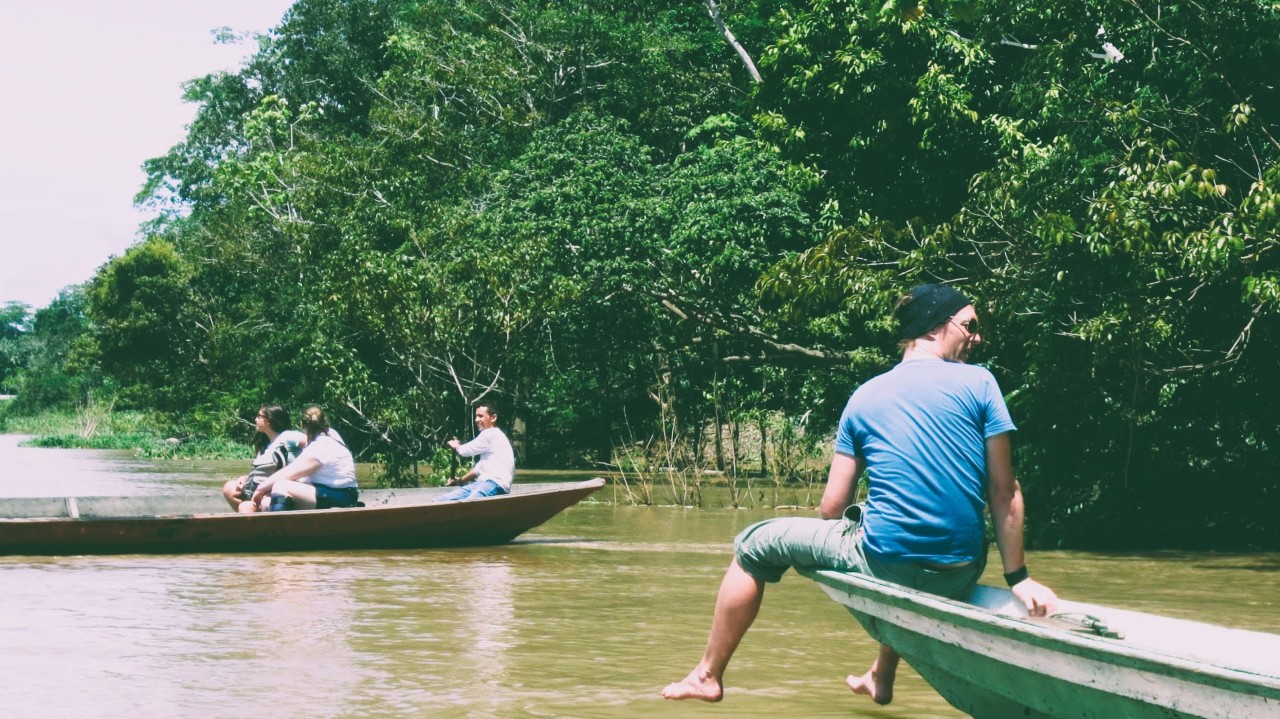
In the northeast, we discovered one of the country’s most beautiful non-touristy beaches – Playa El Morón – and spent time in the Caribbean’s largest protected mangrove area, Los Haitises National Park.
While I’d like to focus on the particular challenges of sargassum and hurricanes, I must also mention the plastic pollution reaching even the most remote Caribbean coastlines. During our boat tour through Los Haitises, I saw something that has haunted me: a solitary great white heron standing on what should have been a pristine beach. The sand was barely visible, blanketed by plastic debris. Our guide explained that the 74 national parks created by past governments to protect places like this are now under threat from budget cuts and waning political support. Even designated protected areas aren’t safe anymore.
On the way to the east and Punta Cana, we explored Santo Domingo’s UNESCO-listed old town, the first colonial city in the Americas, established by Christopher Columbus.
In Punta Cana, the Dominican Republic’s main beach tourism hub, we saw the sargassum crisis in full scale: tens of kilometers of shoreline smothered by brown mats of seaweed, the scent of rot and methane hanging in the air. The seaweed not only makes it impossible for beachgoers to enjoy swimming and relaxing on the sand, but it also suffocates marine life along the coastline. This prompted us to book a catamaran trip to the pristine beaches further south, safe from the sargassum, around Cotubanama National Park and Isla Saona – an extra expense, but absolutely worth it.
By mid-summer 2025, a record-breaking 40 million metric tons of sargassum had flowed through the Atlantic basin and Caribbean – nearly double the previous year. These blooms are primarily fueled by nutrient-rich agricultural runoff and warming seas, creating a growing ecological and environmental challenge for the region.
The economic challenges are also devastating: the Dominican Republic, Mexico, and other nations have reported hotel booking drops of 30-40% during peak sargassum periods. For the Dominican Republic – where tourism represents ~20% of GDP – President Luis Abinader warned at the UN Ocean Conference that sargassum could deal “a significant blow to the GDP of island nations,” threatening hundreds of coastal resorts and billions in investments.
Thankfully, just as entrepreneurs across the Mediterranean are finding ways to curb plastic pollution, others in the Caribbean are confronting the sargassum crisis. I recently met two of them working on innovative solutions.
The first, SOS Carbon in the Dominican Republic, was founded by MIT graduate Andrés Bisonó León. As Andrés explained: “SOS Carbon harvests seaweed from the coastline before it invades the beaches, leveraging local talent and existing infrastructure. The biomass is then processed and turned into commercial products—ranging from plastic alternatives and cosmetics to agricultural bio-inputs such as biostimulants.”
The second, Sway, buys sargassum – including from SOS Carbon – to create sustainable packaging alternatives and circular economy solutions, turning the invasive seaweed into a valuable resource. While these solutions are critical, much more is needed to tackle the problem at its source: reducing agricultural runoff and other sources of pollution.
On our last two days in the Dominican Republic, we got a glimpse of another growing crisis: hurricanes. Hurricane Erin, the first Atlantic storm of the 2025 season, brushed past the island. Its center stayed offshore, but we still faced heavy rains – a clear reminder of the region’s vulnerability.
Climate change is making these storms far more dangerous. The number of Atlantic hurricanes that rapidly intensify has doubled compared to 50 years ago – and they’re now strengthening about 28% faster. The impacts are devastating.
Just weeks after our trip, Hurricane Melissa tore through the Caribbean – particularly Jamaica – with winds reaching 185 mph. It was the strongest storm in the island’s 174-year recorded history, killing 30 people. The UN estimated the damage could equal Jamaica’s entire annual GDP of nearly $20 billion. Haiti and the Dominican Republic also suffered casualties and destruction, though Jamaica bore the brunt of the storm.
While travelers like us may occasionally face disruptions from sargassum or hurricanes, local communities endure far greater hardships – losing homes, livelihoods, and often spending years rebuilding their lives.

Preserving the Natural Heritage of Our Coasts and Beaches
Natural beaches are becoming increasingly rare – not just in the Mediterranean and the Caribbean, but across the globe. The same forces degrading coastlines and marine ecosystems are now reaching even the most remote shores.
If we want our children and grandchildren to experience the joy of playing on clean, living beaches during their summer breaks, we all have a role to play in reversing this trend.
Protecting the Mediterranean and Caribbean coasts will demand far stronger cooperation – among nations and across sectors alike. Only by working together can we rein in unchecked coastal development, keep agricultural runoff and plastic waste out of the sea, curb algal blooms, and restore life to the hundreds of expanding dead zones that now scar our oceans.
For that cooperation to take root, two concepts must be understood by decision-makers: the economic value of nature and environmental generational amnesia.
The economic value of nature is fundamental if development is to be balanced with conservation. Nature is essential infrastructure – it provides ecosystem services and long-term wealth that no engineered solution can replicate. This includes cultural and aesthetic services that sustain tourism and real-estate value over time. As coastlines lose clean water, fresh air, and natural beauty, they also lose their appeal to visitors and investors. There is a direct link between nature loss and financial loss, especially in coastal development.
Environmental generational amnesia, a term coined by psychologist Peter Kahn, describes how each generation grows accustomed to a more degraded environment, forgetting what once was. Children who grow up surrounded by concrete and plastic – even on beaches – cannot imagine shores with pure sand, clean water, native vegetation, and diverse seabirds or marine life. Over time, degraded beaches become the new normal. In both the Mediterranean and the Caribbean, studies show that even local communities have lost collective memory of once-vibrant coastal and underwater ecosystems, eroding conservation awareness.
True progress will require both cooperation and a renewed understanding of nature’s value – ensuring that coastal ecosystems continue to support communities, investors, and visitors alike. Our natural heritage, including our coasts, beaches, and marine life, deserves protection equal to that of our cultural heritage. Only then can we secure long-term prosperity and ensure that future generations inherit living, natural coastlines – not just memories of them.

Leave a Reply