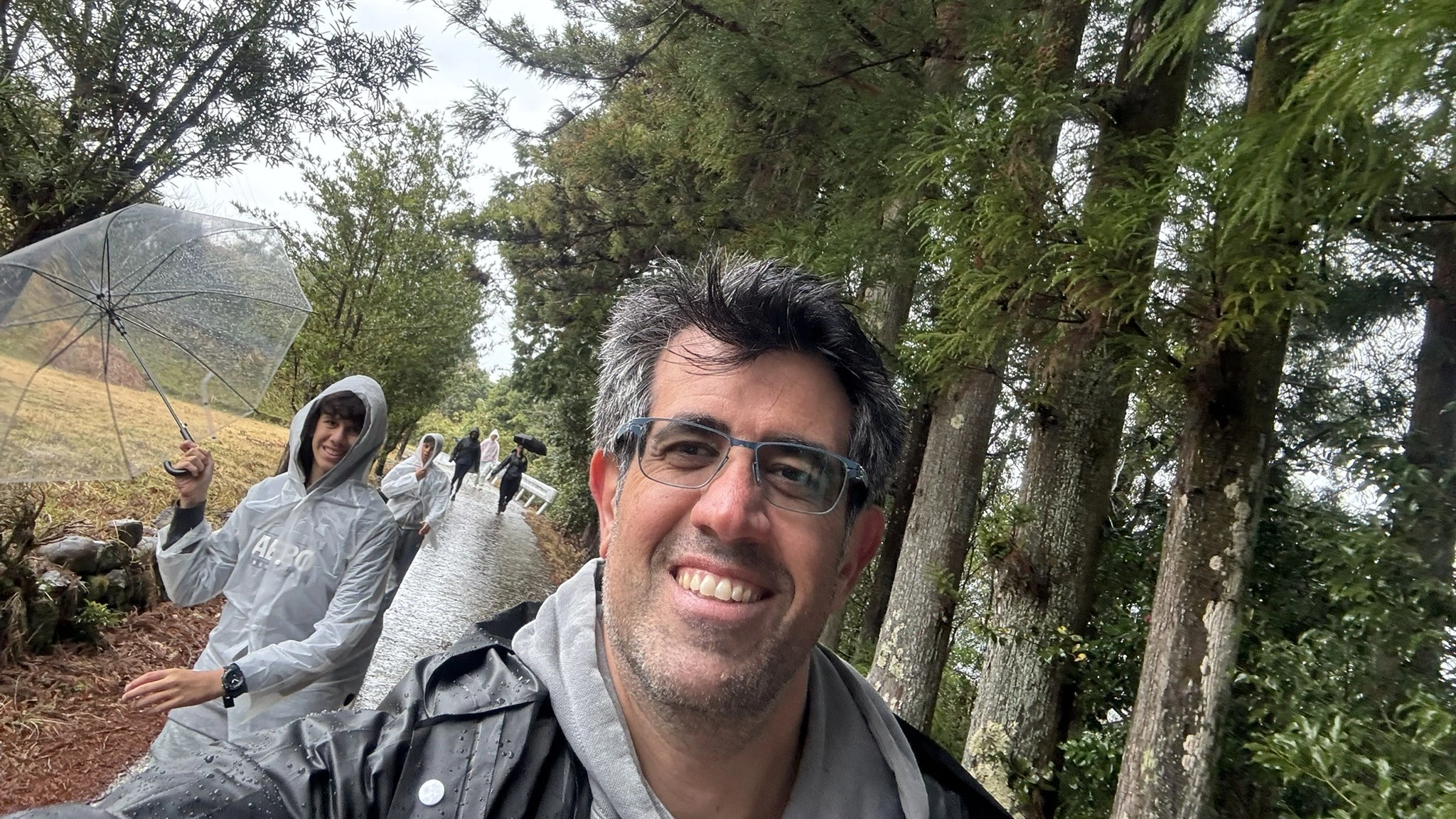
Every April 22nd, the world pauses to reflect on the state of our planet. This year, I want to share something different: a life-changing journey in Japan.
Over 15 days this spring, our family walked nearly 300 km through Japan during cherry blossom season: through the electric streets and ancient parks of Tokyo, Nikko’s UNESCO forest shrines, the lakeside paths of Hakone, Kyoto’s sacred groves and river valleys, and finally the Kumano Kodo, one of only two UNESCO-designated pilgrimage trails in the world alongside the Camino de Santiago. The trip was a constant and exhilarating movement between Japan’s dazzling modernity and its deep natural heritage; and it was probably the most walking we have ever done as a family in one trip. This time we didn’t travel alone, as close friends and other family members joined us for various parts of the journey, making it all the more memorable.
This essay focuses on the natural side of that journey: the forests, groves, valleys and trails that form the heart of what Japan truly is. Japan is a country that covers nearly 70% of its land in forest, a result of geography, careful management, and something less easily measured: a spiritual tradition that has consecrated nature for over two thousand years. Shintoism and Buddhism, two living faiths practiced today in some of the world’s most beautiful natural settings, have made Japan’s sacred groves, the chinju no mori, untouchable in ways that no policy alone could achieve.
That lesson matters far beyond Japan. Because if we look carefully across traditions, Christian, Islamic, Hindu, Jewish, indigenous, and many others, and even among the non-religious, we find the same instinct: nature is sacred, and what is sacred must be protected. On Earth Day, that convergence feels like the most important message of all. We do not share the same traditions. But we share the same home. And across every tradition and conscience, that home is holy.
Tokyo, Nikko and Hakone
Tokyo is perhaps the world’s largest urban agglomeration, yet it weaves an impressive network of parks, gardens and sacred groves into its urban fabric: small but vital pockets of nature that offer daily escape to its residents. Beyond the adventures our kids had eagerly anticipated, the 7-Eleven egg sandwiches and the arcades of Akihabara, we spent our days exploring temples, shrines, historic gardens and green spaces woven throughout the city.
Two nature highlights stood out. The first was walking through the Meiji Jingu Shrine, dedicated to Emperor Meiji, the emperor of the Meiji Restoration who opened Japan to the modern world, and its extraordinary forest: 100,000 trees of 365 species planted a century ago by volunteers from across Japan, designed as a self-renewing sacred woodland at the heart of the city. The second was a picnic with our guide Setsuko at Shinjuku Gyoen, one of Tokyo’s finest botanical gardens, bento boxes from the train station in hand, where cherry blossoms, magnolias and early spring wildflowers were just beginning their spectacular display.
We also explored other beautiful places across the city, including the Imperial Palace and its gardens, and Senso-ji, Tokyo’s oldest temple, just steps from our Asakusa base, its ancient wooden gate framed by cherry trees just beginning to bloom.
On our fourth day we visited the Nikko UNESCO site and National Park, one of the most memorable of the entire trip. A complex of Shinto shrines and Buddhist temples set in an outstanding natural forest, Nikko is inseparable from the legacy of Tokugawa Ieyasu, the shogun who unified Japan and ushered in nearly 250 years of peace, and whose mausoleum rests here among the trees. The entire area is embraced by a magnificent forest of over 13,000 cedar trees, and a famous 37-kilometre avenue of cryptomeria lines the ancient roads connecting Nikko to the outside world, the longest tree-lined avenue on Earth.
After a final day back in Tokyo, we headed to the Fuji-Hakone-Izu National Park for two days of contrasts: the Hakone loop through the open-air museum, with its remarkable Picasso gallery and sculpture collection, a cable car and one of Japan’s longest ropeways down to Lake Ashi, and a pirate ship ride to our cabin on the hill, reached by ancient stone paths.
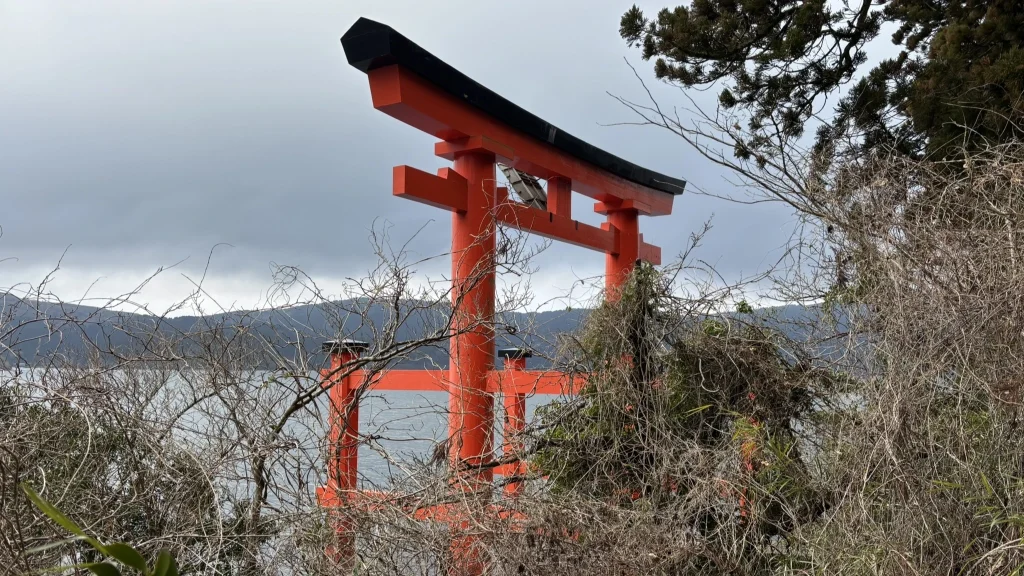
The following morning, we hiked to Hakone Shrine, founded in the 8th century, its buildings nestled in a forest of cedar trees over 800 years old, approached through a series of red arches leading to the famous vermillion torii gate rising from the waters of the lake. That morning, Mount Fuji was hidden behind thick mist – yet somehow, its energy still permeated the air, the lake, and the ancient cedars around us.
Kyoto’s sacred sites and groves
In Kyoto, we based ourselves in a beautiful historic teahouse in the Gojo neighborhood, tucked between the Kamo River and the Takase Canal, a perfectly placed retreat from which to explore on foot. Kyoto is Japan’s cultural and spiritual heart, and with over 1,600 shrines and temples, every walk led us into a sacred grove.
Our Kyoto chapter opened with a walk along the Philosopher’s Path, named after Nishida Kitaro, an influential 20th-century philosopher who walked this route daily as a meditative commute to Kyoto University. The two-km stone path follows a cherry-tree-lined canal from Nanzen-ji to Ginkaku-ji, the Silver Pavilion (one of Kyoto’s 17 UNESCO World Heritage Sites), where manicured moss gardens and blossoming trees met a clean morning breeze off the water. It was easy to understand why a philosopher found clarity here.
My friend Christos and I made a habit of early starts before our families woke. On one such morning we climbed to Kiyomizu-dera (UNESCO), its wooden stage cantilevered over a forested hillside with sweeping views of Kyoto’s rooftops and the wooded mountains beyond, framed by the old Higashiyama neighborhood below. On the way back we stopped at the picturesque five-storey Yasaka Pagoda and discovered one of Kyoto’s finest bakeries, bringing back a breakfast that made us heroes for the day.
One of the most iconic stops in Kyoto was Fushimi Inari Taisha, the shrine of ten thousand vermillion torii gates dedicated to Inari, the Shinto deity of rice and prosperity, whose sacred messengers are the fox, a reminder of how Shinto consecrates the natural world, animal and plant alike, as divine. The trails lead deep into a sacred forest of cedar, cypress and maple on Mount Inari. The lower levels were packed with visitors, but higher up the mountain the crowds thinned, the forest thickened, and the experience became something closer to pilgrimage than tourism.
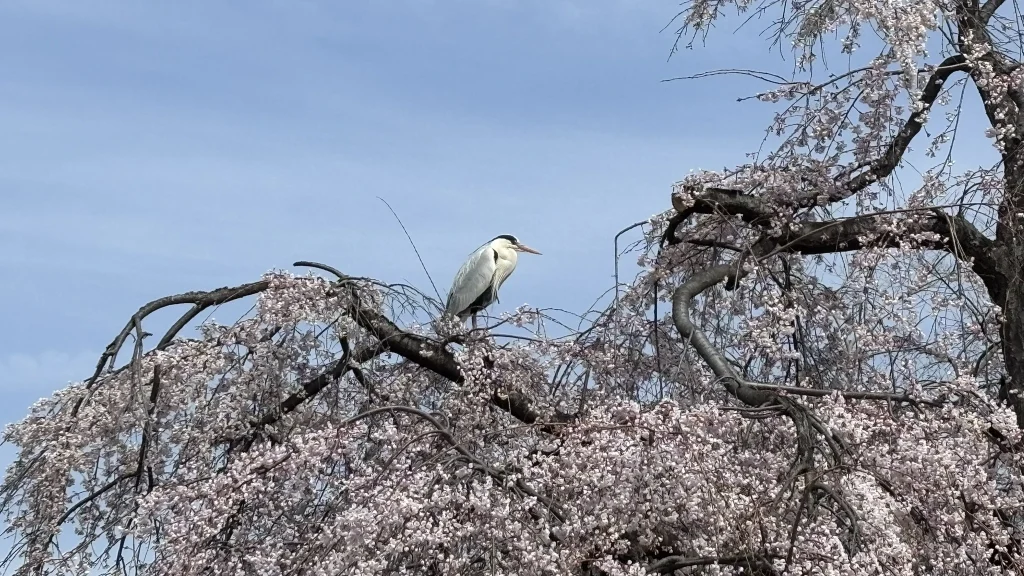
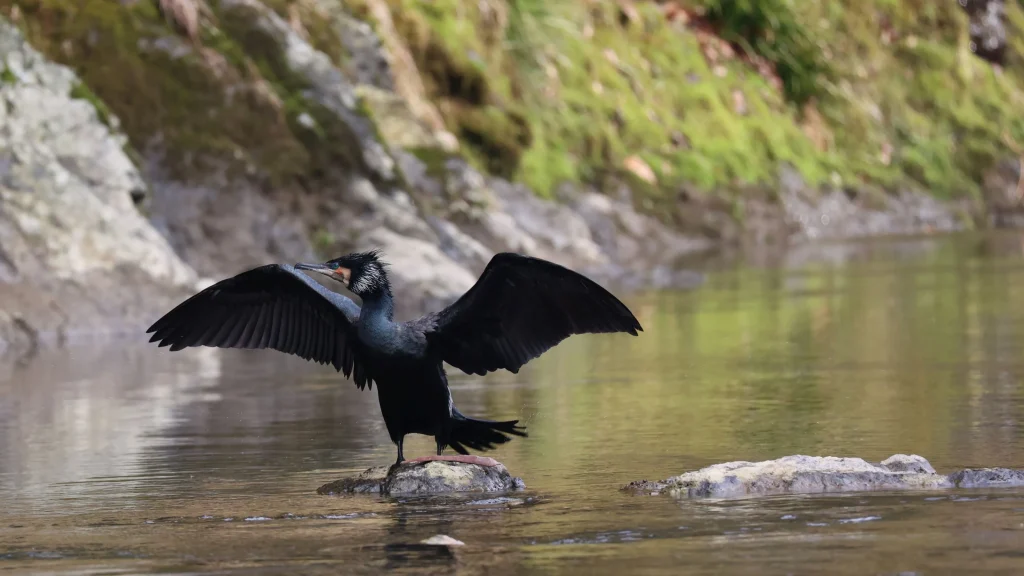
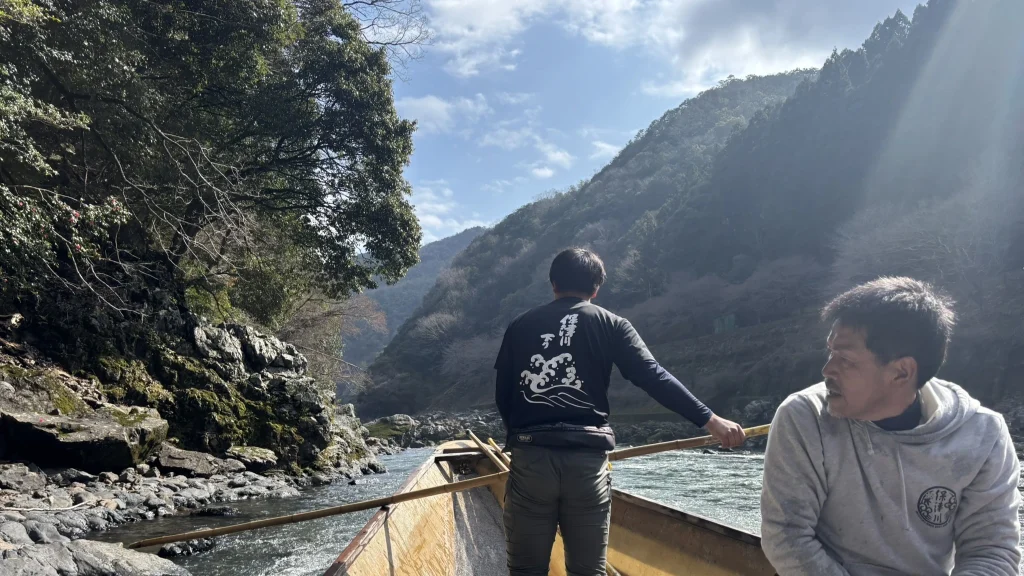
Our Kyoto journey ended on a high note: a traditional boat ride downstream through the dramatic Hozugawa Gorge, steered by oarsmen using only bamboo poles and oars. Grey herons stood motionless in the shallows, kingfishers darted across the water, and mandarin and spot-billed ducks dotted the river in abundance. On the rocks, cormorants held their wings wide open to dry, one of the most memorable sights of the entire trip. The ride delivered us into Arashiyama, where we walked through the famous bamboo grove before discovering Tenryu-ji (UNESCO), a Zen Buddhist temple founded in the 14th century whose Sogen Pond Garden uses the forested mountains of Arashiyama as borrowed scenery, dissolving the boundary between the designed and the wild. It was, in many ways, the perfect encapsulation of everything Kyoto had shown us.
The Kumano Kodo UNESCO pilgrimage
This was the most anticipated part of the trip, at least for me, and certainly the most difficult to plan. The Kumano Kodo is one of only two UNESCO-designated pilgrimage trails in the world alongside the Camino de Santiago, and the only one where two sacred traditions – Shinto and Buddhism – have coexisted on the same trails for over a thousand years, drawing emperors, samurai and ordinary pilgrims alike through the sacred mountains of the Kii Peninsula.
The heart of the pilgrimage – the Nakahechi trail – took us about five hours to complete, gaining several hundred meters of elevation from the ancient starting point at Takijiri-oji through dense sacred forest to the village of Takahara. The trail was not easy, but our kids surprised us completely, charging ahead while the adults struggled to keep up. What made it truly unforgettable was the rain. We were soaked from start to finish, the only rainy day of our entire trip, and walking in silence through a dripping ancient forest truly felt like a ritual. We experienced Shinrin-Yoku – forest bathing – in its most literal sense!
Along the trail and throughout the journey, Christos and I religiously collected our goshuin at the shrines and temples we visited, red seals stamped and calligraphy handwritten into our goshuincho, the traditional dedicated books carried by pilgrims throughout Japan. Each entry is a small act of devotion and a mark of the sacred sites visited, and by the end of the trip ours were among our most treasured souvenirs.
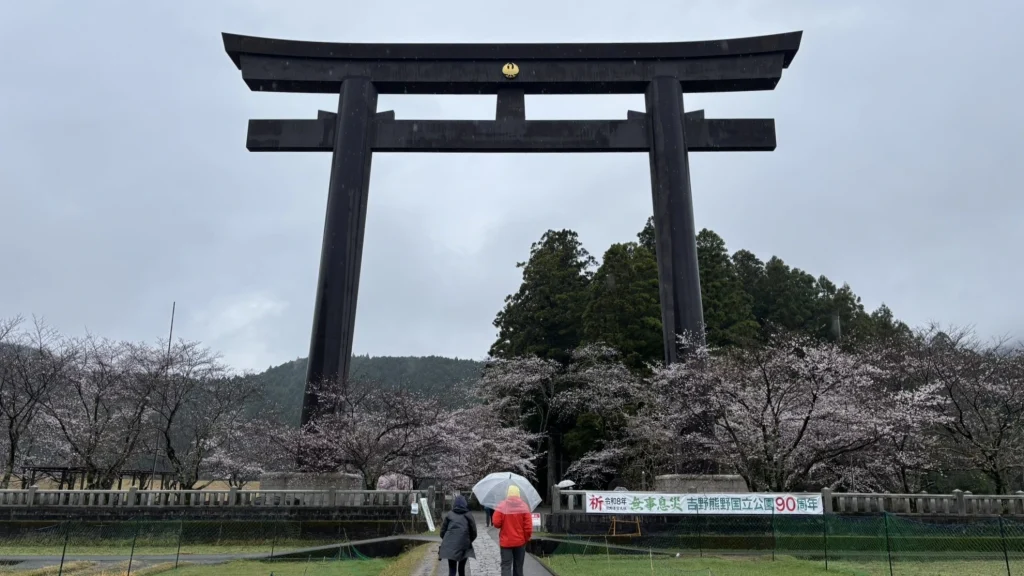
That day we also stood before the Oyunohara Otorii, the largest torii gate in the world, standing ~34 meters tall and 42 meters wide, erected at the entrance to the original sandbank site of Kumano Hongu Taisha where legend has it the Kumano deities descended to earth in the form of three moons into the branches of a giant oak tree. The gate marks the threshold to Hongu Taisha, the head shrine of over 3,000 Kumano shrines across Japan, and the spiritual destination to which all Kumano Kodo pilgrimage routes ultimately lead. Standing beneath it in the mist and rain, dwarfed by its scale, the boundary between the sacred and the natural felt very thin indeed.
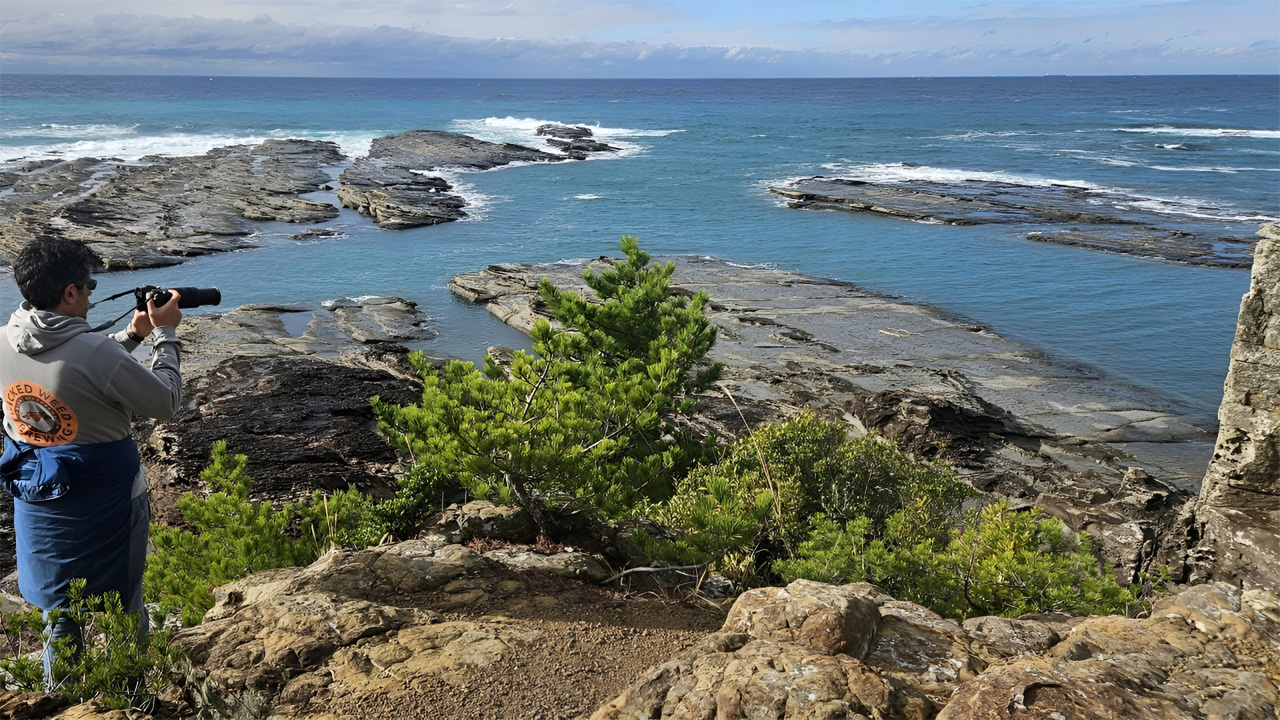
During our three days in the area we stayed at a beautiful glamping site on the Wakayama coast, inside Yoshino Kumano National Park, surrounded by dramatic cliffs above the Pacific, with white-tailed eagles and blue rock thrushes surveilling the shoreline. We also had one of the most memorable culinary experiences of the trip: a BBQ feast of Wagyu beef, fresh scallops and seasonal local Wakayama produce.
The Kumano Kodo sits within Yoshino-Kumano National Park, one of Japan’s oldest protected areas, home to Japanese macaques, Asian black bears and hundreds of bird species. This landscape is also one of Japan’s finest examples of the Satoyama concept, the centuries-old practice of sustainably managing the border zone between village and mountain, the very landscape the Nakahechi trail winds through. In 2010 the Satoyama Initiative was launched jointly by Japan’s Ministry of Environment and the United Nations University, recognising this model as a global blueprint for societies in harmony with nature.
We kept many trails and sites for our next visit, including Nachi Falls, the tallest waterfall in Japan at 133 meters, whose cascading waters are themselves enshrined as a Shinto deity at Kumano Nachi Taisha.
The Kumano Kodo left us with a key question: how has Japan managed to hold on to all of this, despite being one of the world’s most modern and developed nations?
When faith and culture protect nature – Japan and beyond
Japan’s sacred forests are not an exception – they are a statement about what happens when nature becomes culture through faith. Across the country, over 80,000 Shinto shrine forests and thousands of Buddhist temple groves form an invisible protected area network that no government decree created and no budget maintains. They endure because they are sacred.
But Japan has taken this further than most. What began as spiritual reverence has evolved into science. Shinrin-Yoku – forest bathing – is now a medically recognized practice in Japan, where doctors prescribe time in forests specifically for their healing effects. The science is compelling: spending two to three days in a forest has been associated with a 50% or more increase in natural killer cells, with effects lasting up to 30 days, largely thanks to terpenes, the organic compounds emitted by trees and plants that we breathe in as we walk. Faith opened the door; science walked through it.
What is remarkable about Japan is that this reverence for nature has not stayed in the shrine; it has migrated into medicine, business and national policy, becoming a defining thread of Japanese culture. Today, over 200 Japanese multinationals and businesses are integrating the TNFD, the Taskforce on Nature-related Financial Disclosures, the highest uptake of any country globally. Japan is also among the most committed nations to the Kunming-Montreal Global Biodiversity Framework and its 30×30 goal, striving to protect 30% of its land and sea by 2030.
Japan may be the most visible example of faith-based conservation at scale, but it is far from alone. India is home to between 100,000 and 150,000 sacred groves across Hindu, Buddhist and Jain traditions, biodiversity refugia that have outlasted centuries of development pressure because communities believe them to be divine. In the Middle East, the ancient Islamic Hima system, a sharia-rooted tradition of community-managed conservation areas, has been quietly protecting landscapes across the region for over a thousand years, including in countries I have had the privilege of working in closely.
In Ethiopia, 35,000 Orthodox Tewahedo church forests form one of the country’s most important conservation networks, the last fragments of highland forest in a heavily deforested landscape. In Christianity more broadly, Laudato Si, Pope Francis’s landmark 2015 encyclical addressed to every person on the planet, called for an urgent ecological conversion, reminding 1.3 billion Catholics that care for creation is not optional but a moral imperative. And in Bhutan, where our family was fortunate to travel a few years ago, the intertwined traditions of Bon and Buddhism have shaped an entire socio-economic philosophy, captured in the Gross National Happiness index, that has kept over 50% of the country forested and became a global reference for development in harmony with nature.
These traditions did not coordinate. Yet independently, across millennia and continents, they arrived at the same truth: that nature is sacred, and what is sacred must be protected.
On this Earth Day, that convergence is perhaps the most powerful reminder we have. We are not separate from nature – we are part of it. And this planet, with all its forests, rivers, groves and living creatures, is the only home we have ever shared.


Leave a Reply